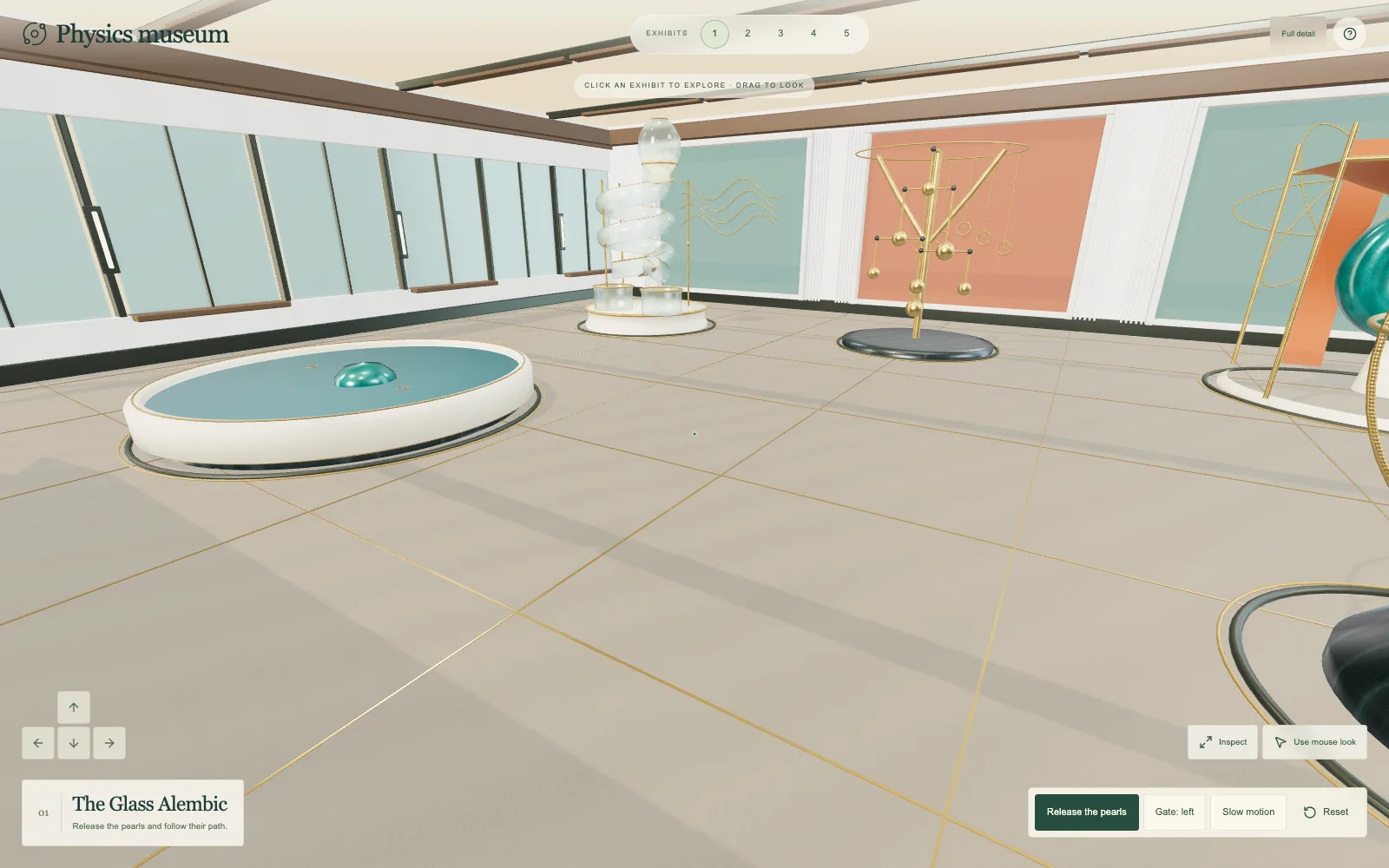
深海之下:按深度分区的滚动叙事
向下滚动依次穿过阳光层、暮光层、午夜层、深渊层与超深渊层,每层配一只可检视的标本(海龟、吸血鬼乌贼、黑海魔、海猪)。它最克制的一处是在页面上直接写明「滚动距离与深度不成比例」——既保住了下潜的体感,又没有拿视觉效果冒充数据。
- next.js
- react
- typescript
画面由本站录制,作品著作权归 Katia Gil Guzman
实现过程
滚动叙事最常见的毛病是为了沉浸感劫持滚动条,代价是没法回头、键盘用不了、晕动症的人直接出局。这件作品反过来做:下潜完全建立在原生滚动之上,沉浸感靠背景光衰减与信息密度递减来给,可访问性因此不用事后补。
建一条连续的下潜
操作作者给 AI 的指令原文 Build a complete, polished, interactive landing page. Use clear, natural copy and a restrained layout with purposeful controls. Keep native scrolling, support phone and desktop layouts, keyboard controls, and reduced motion. The main interaction should work without a runtime AI call or account. Scenario: Below the Surface is a digital ocean exhibition. A visitor scrolls from the sunlit surface into the deep sea, discovering how light, pressure and animals change with depth. This should demonstrate immersive visual storytelling and clear scientific explanation. Art direction: a bright atmospheric surface that becomes saturated blue, then near-black; large, carefully composed marine illustrations or 3D specimens, restrained luminous accents, and confident typography with generous negative space. Avoid a science-dashboard layout. The ocean itself is the page. Hero: “Explore the ocean by depth.” “Start the descent” leads into one continuous scroll journey. Use parallax among water layers, marine snow and specimens, and a compact depth indicator that helps orient the visitor. Native scrolling must remain natural, with reversible changes in depth, light and content. Choose four or five evidence-based depth zones and a small set of accurately placed animals. Research the key depth/size facts in reliable scientific or museum sources and keep citations accessible through a compact sources section. Do not invent research findings, exact species ranges or live sensor data. At selected depths, visitors can inspect a specimen without leaving the scene: gently rotate it, switch bioluminescence on/off where biologically appropriate, or reveal a simple annotated cutaway. Clearly distinguish an explanatory light control from a claim that every animal glows. Add a “Compare sizes” view where the same scale is applied to the specimen and a diver or research submersible, with a visible scale reference. At the deepest chapter, a controlled light beam can be moved with pointer/touch or keyboard to reveal details in a bounded part of the scene. Provide an equivalent “Light the scene” control so the interaction never blocks reading. The final action returns to the surface and leaves an elegant summary of the depth zones. Use accurate silhouettes and anatomy; generate or model assets deliberately and retain sources. Keep particles and displacement performant, pause offscreen simulation, and provide a beautiful reduced-motion version. Test rapid forward/back scrolling, detail open/close, depth synchronization, scale comparisons, touch and recovery to the surface. The result should be an engaging exhibition landing page with science visitors can trust.
生成物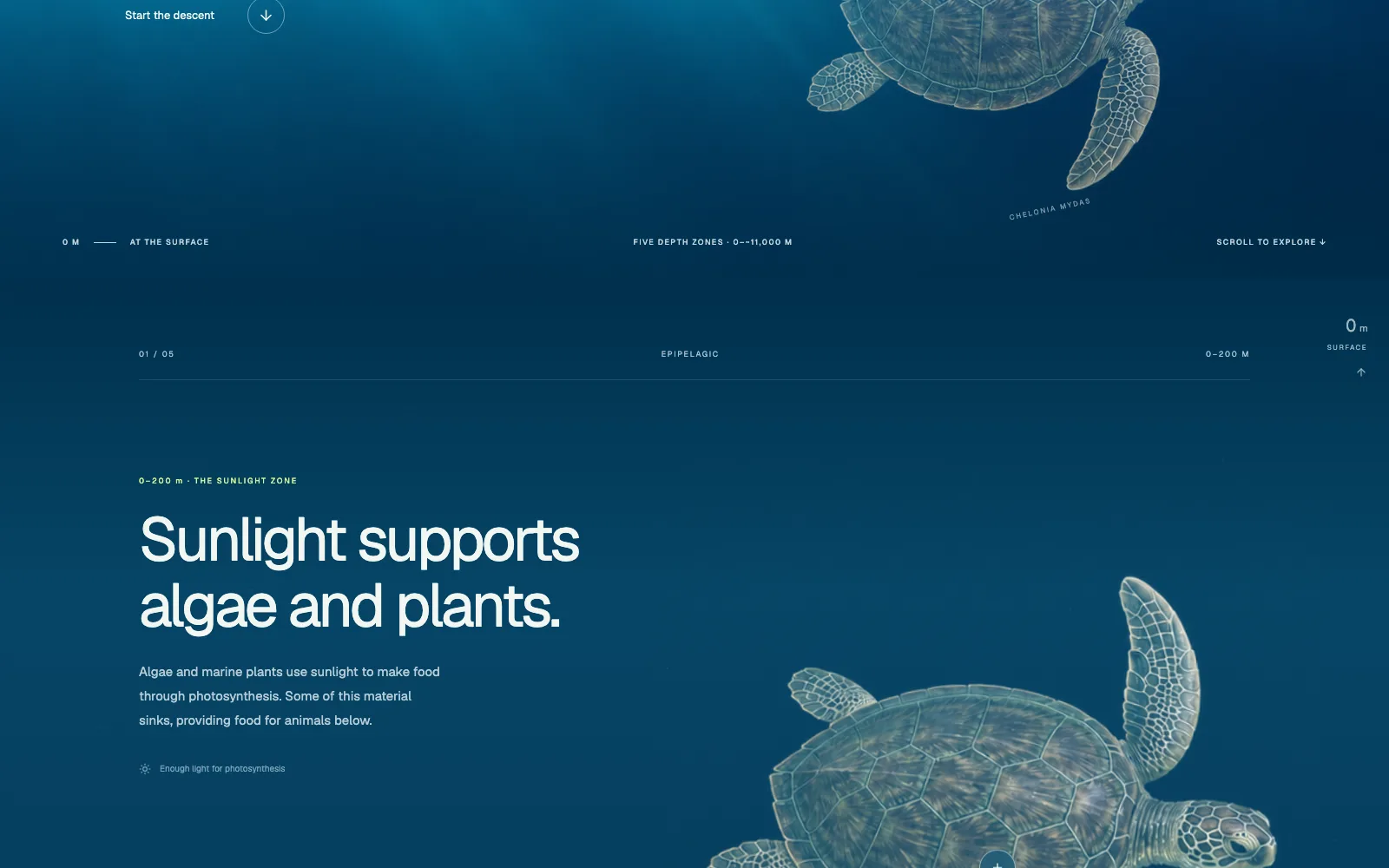 注
注整件作品的骨架一步到位:五个分层、可检视的标本、尺度对比、最深层的探照光、减少动效版本、可核对的出处——全在这一个 prompt 里。尤其「不要编造研究发现、精确物种深度区间或实时传感器数据」这一句,是科普作品可信度的底线。
生成海洋背景
操作作者给 AI 的指令原文 Create an underwater background with sunlight and a gradual shift into depth.
生成物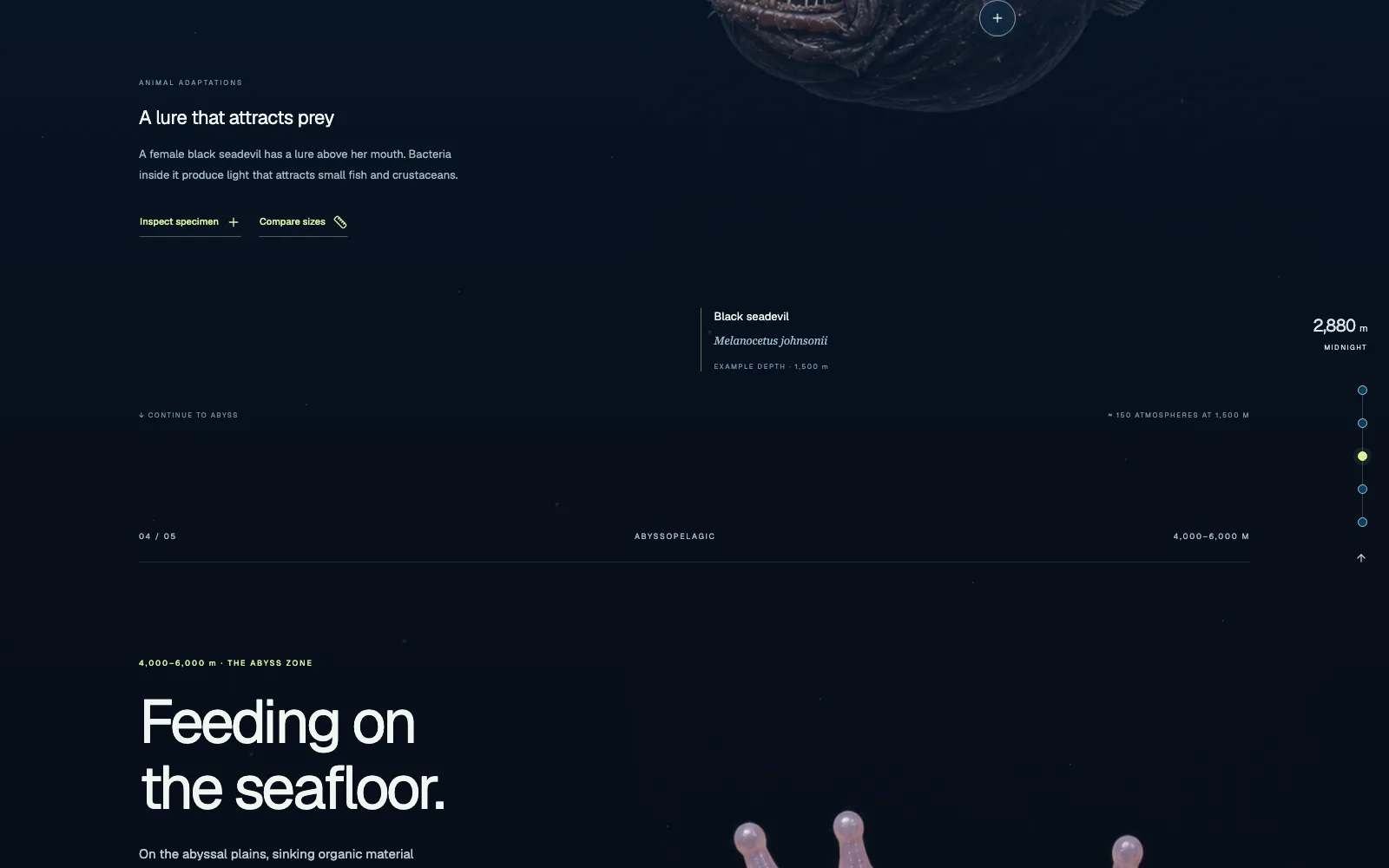 注
注背景不是一张图,是一条从阳光到近黑的渐变,随滚动连续变化。午夜层这张能看到它已经暗到只剩生物发光的程度。
重写展陈文案
操作作者给 AI 的指令原文 Clarify the science and interaction labels while preserving the visuals.
生成物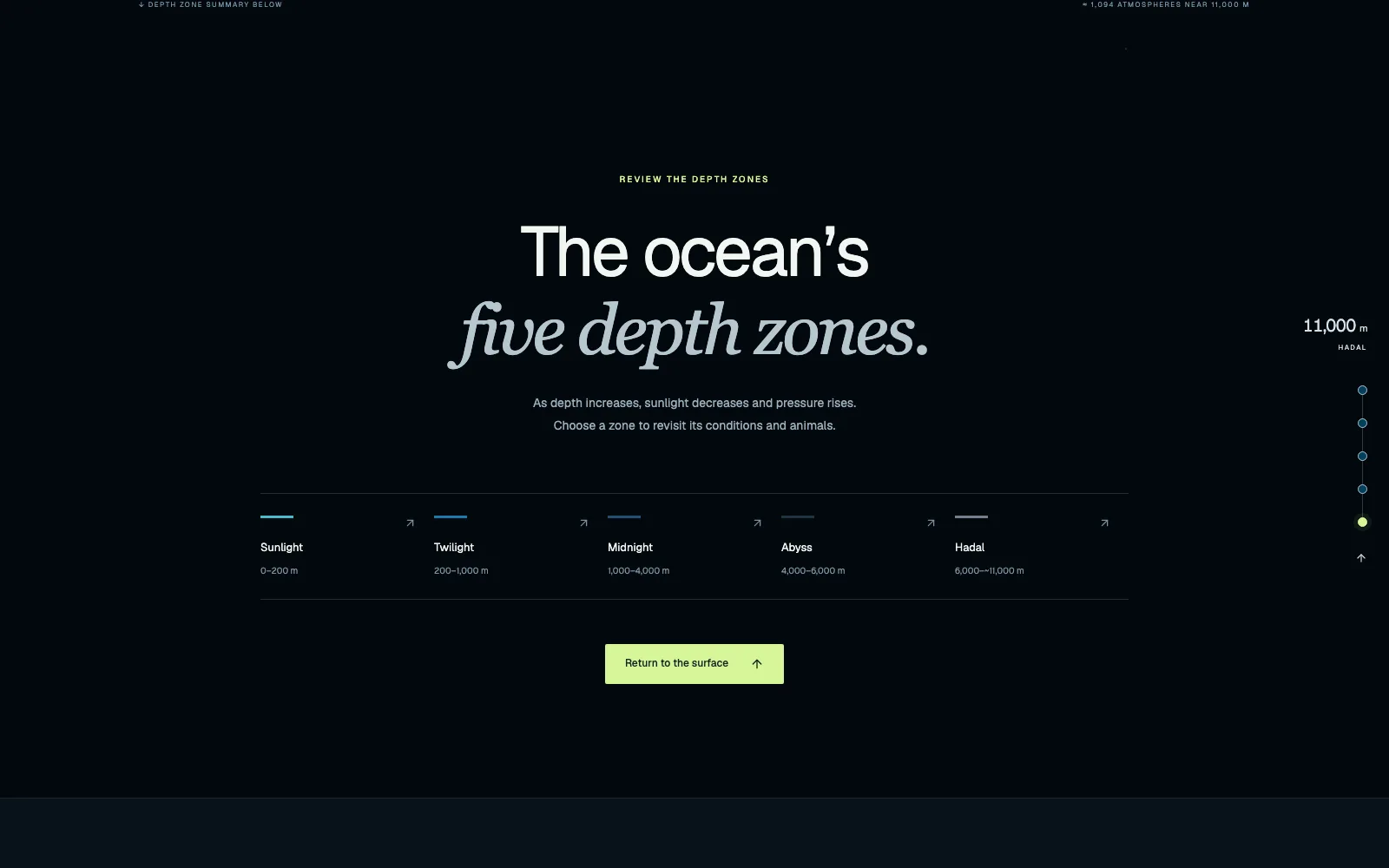 注
注最后一轮只改文字,不动视觉:把科学表述改准、把交互标签说清。科普作品的可信度是逐句攒出来的——这一步没有截图能表达,所以生成物就是收尾那页的深度分层总结。
据以下公开资料整理,核对于 。 指令原文引自作者公开的构建记录;编辑部注与其中的判断由昆仑编辑部撰写,不代表原作者观点。